NIME - Musical Instrument at the Time of the Beta Performance
Nov 7, 2018 18:03 · 723 words · 4 minutes read
This post will go through the state of my musical instrument and the prossess of getting there at the time of the beta performance.
Description
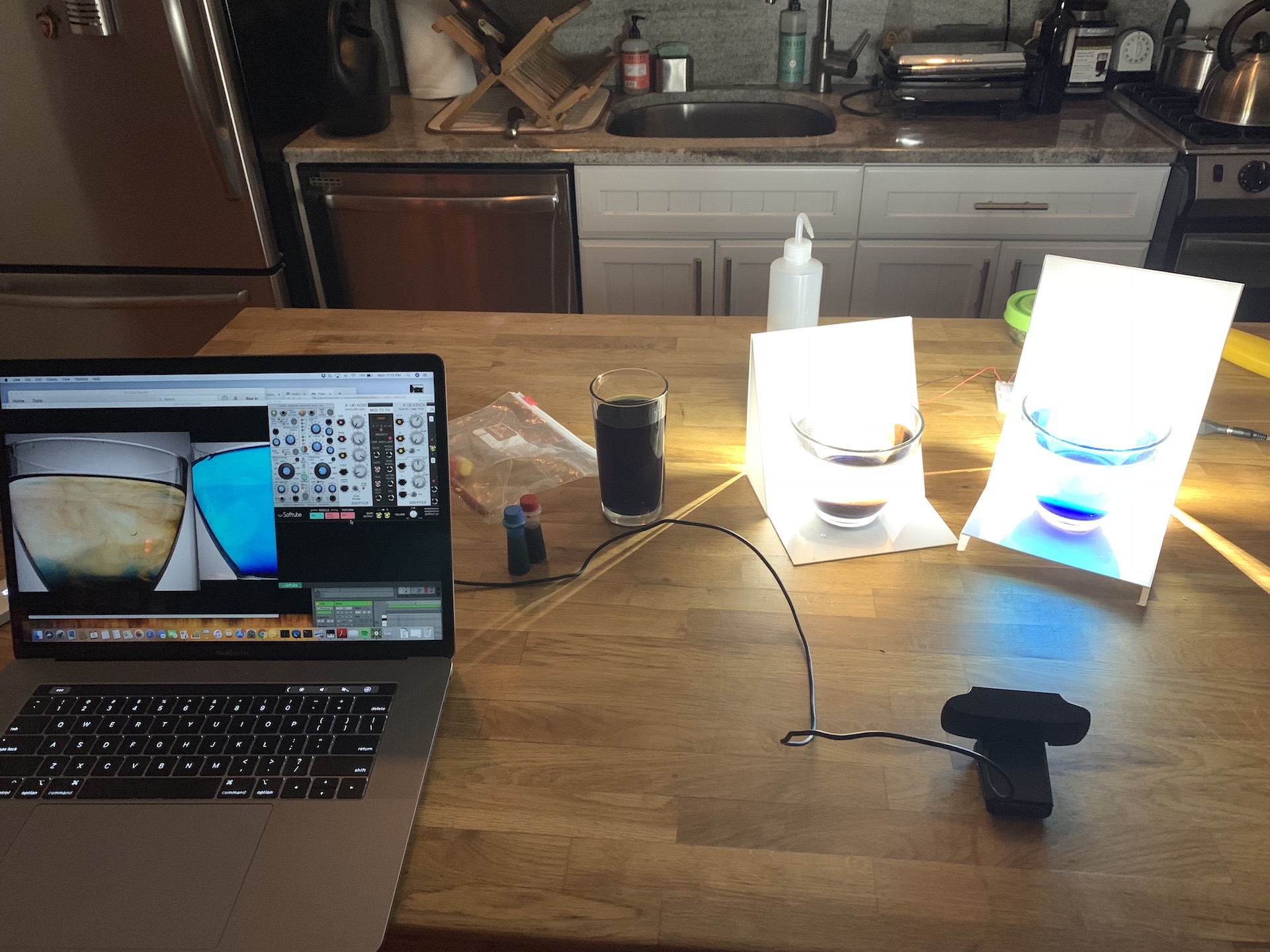
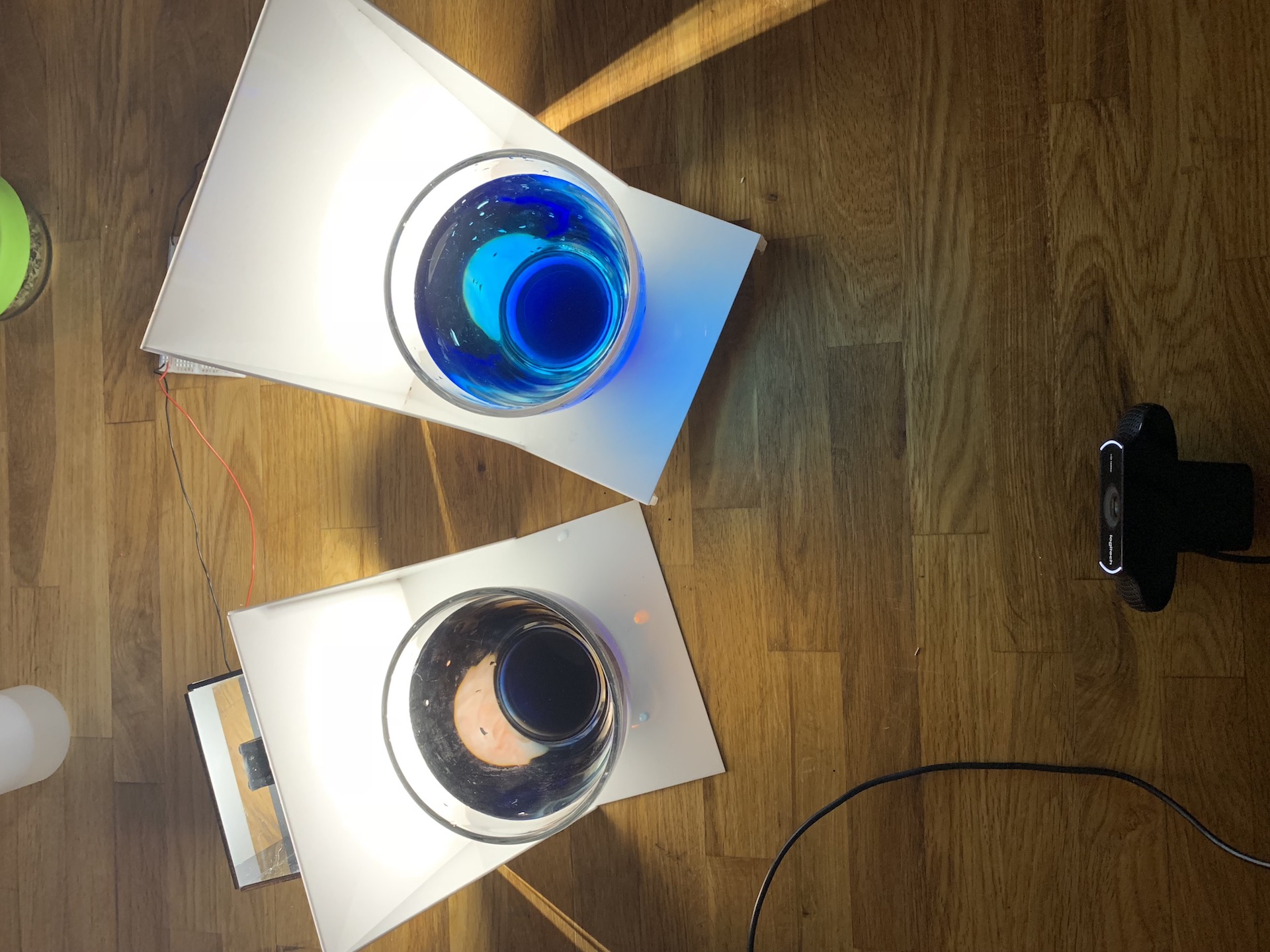
The Liquisynth is a modular synthesis system controlled by the performer and randomness in fluids as observed by cameras.
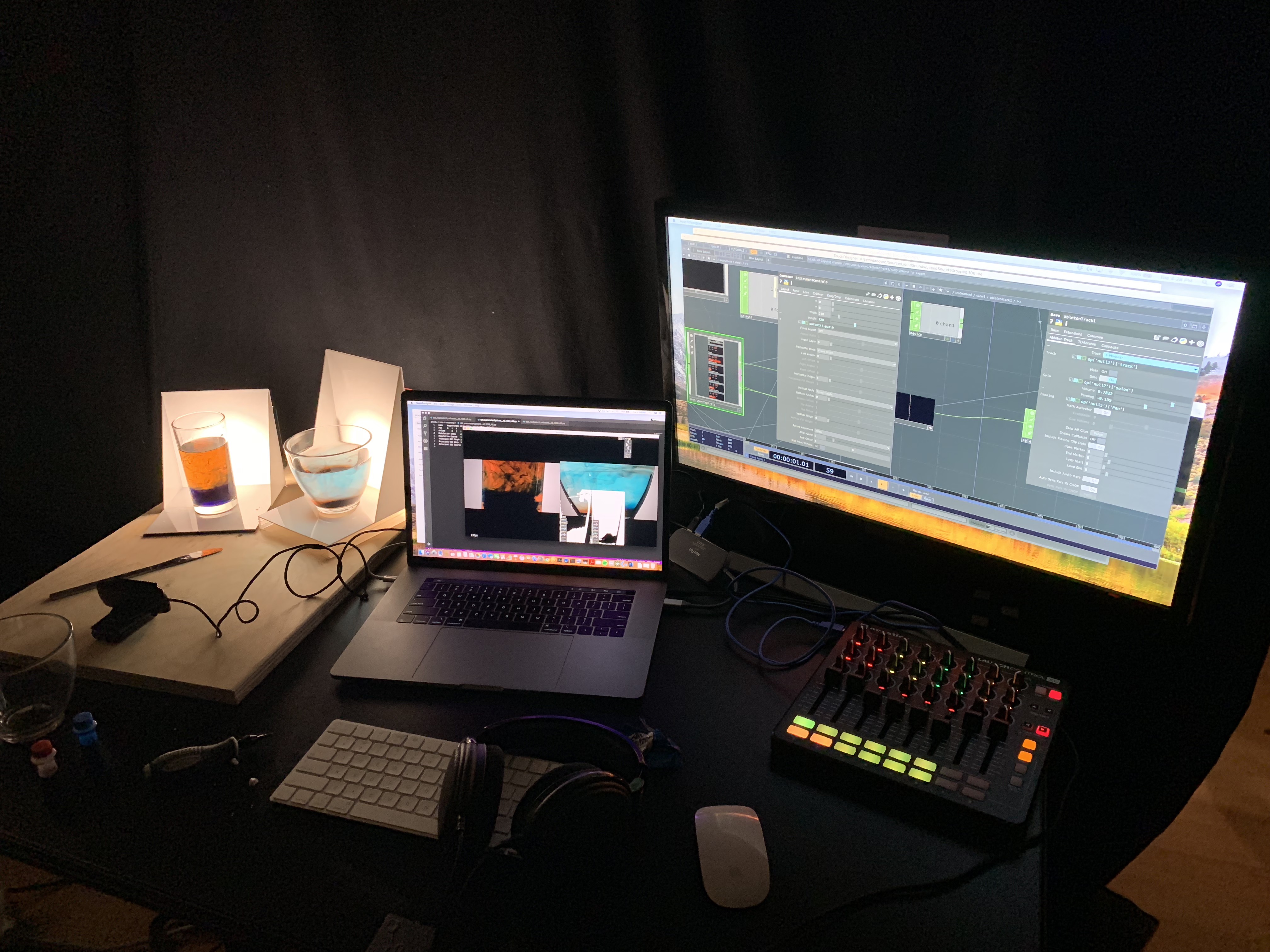
The instrument now consists of:
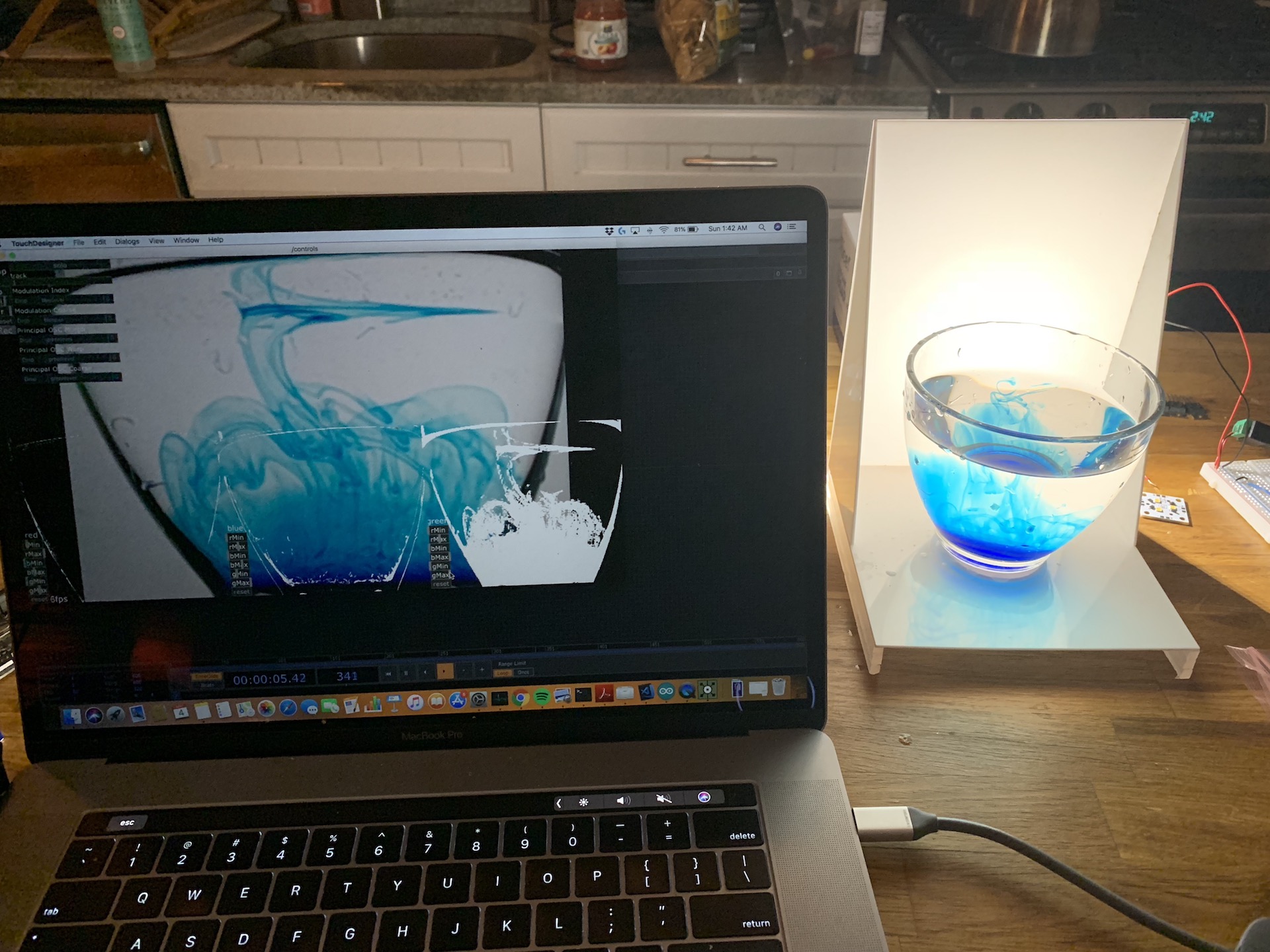
- An interface built in TouchDesigner. Multiple jars of liquid can be viewed at from a camera. Views of these liquids are cropped from the camera feed, with sliders allowing for specifications of the crops.
- The shape of these liquids is used to modulate sounds by turning knobs in the Softube modular synthesizer system with the Buchla 259e twisted waveform generator used as an oscillator to produce unique, rich analog sounds.
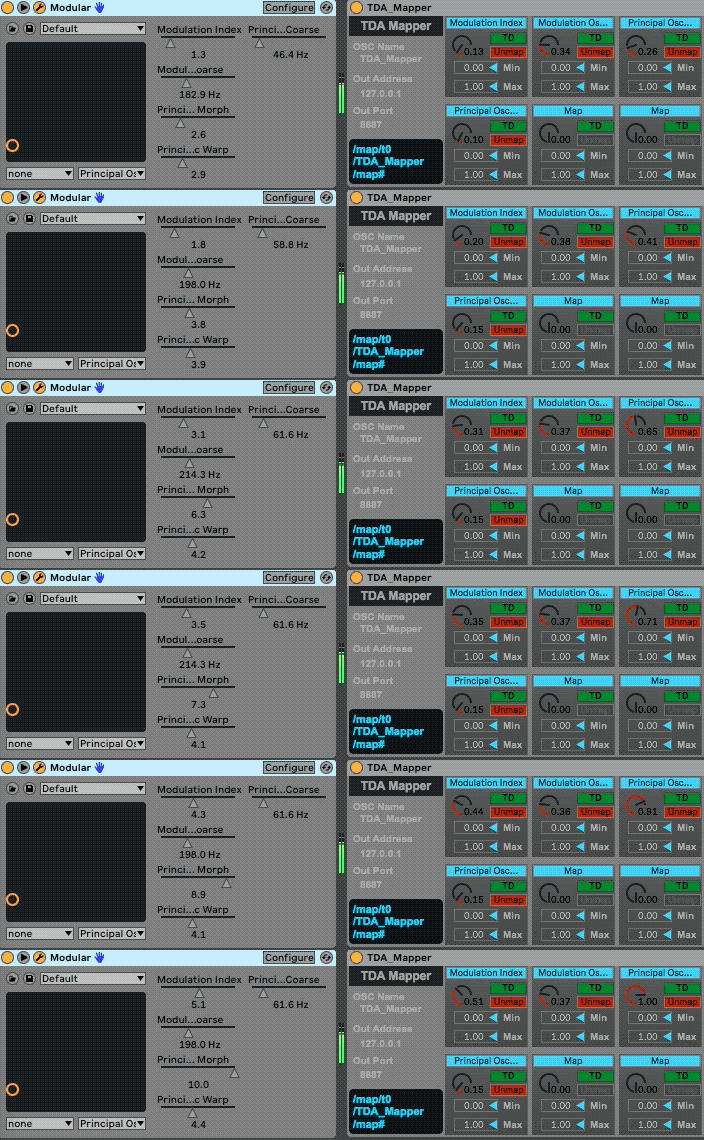
- This modular system is accessed as a VST Plugin in Ableton, with the knobs linked to TouchDesigner using TDAbleton, “a tool for linking TouchDesigner tightly with Ableton Live. It offers full access to most everything going on in an Ableton set, both for viewing and setting.”
TODO: gif
- Each of these views can be recorded independently and played back in the place of a live feed. This allows me to practice different scenarios and tune the instrument without needing to mix liquids live and make a mess.
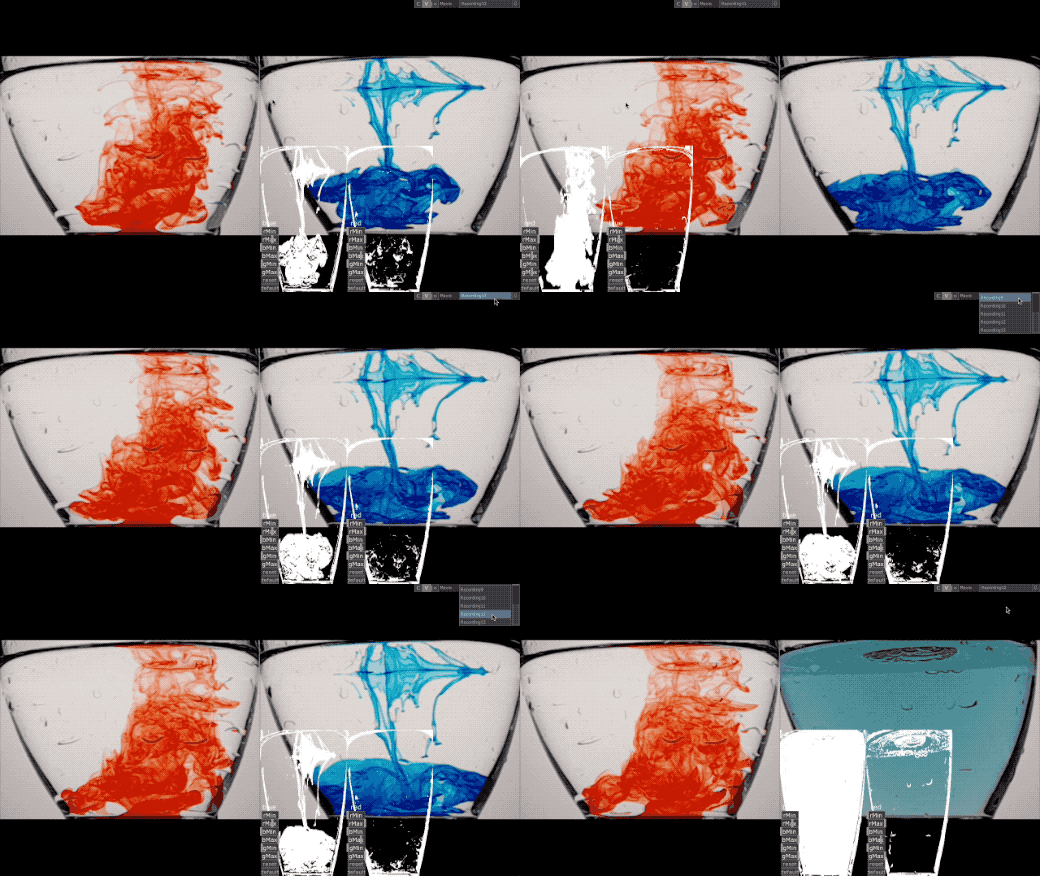
Each view can be switched easily between a live feed or one of these pre-recorded videos.
TODO: gif
For each view, the red, blue and green levels, their amount of fragmentation and horizontal distribution can all be calculated independently.
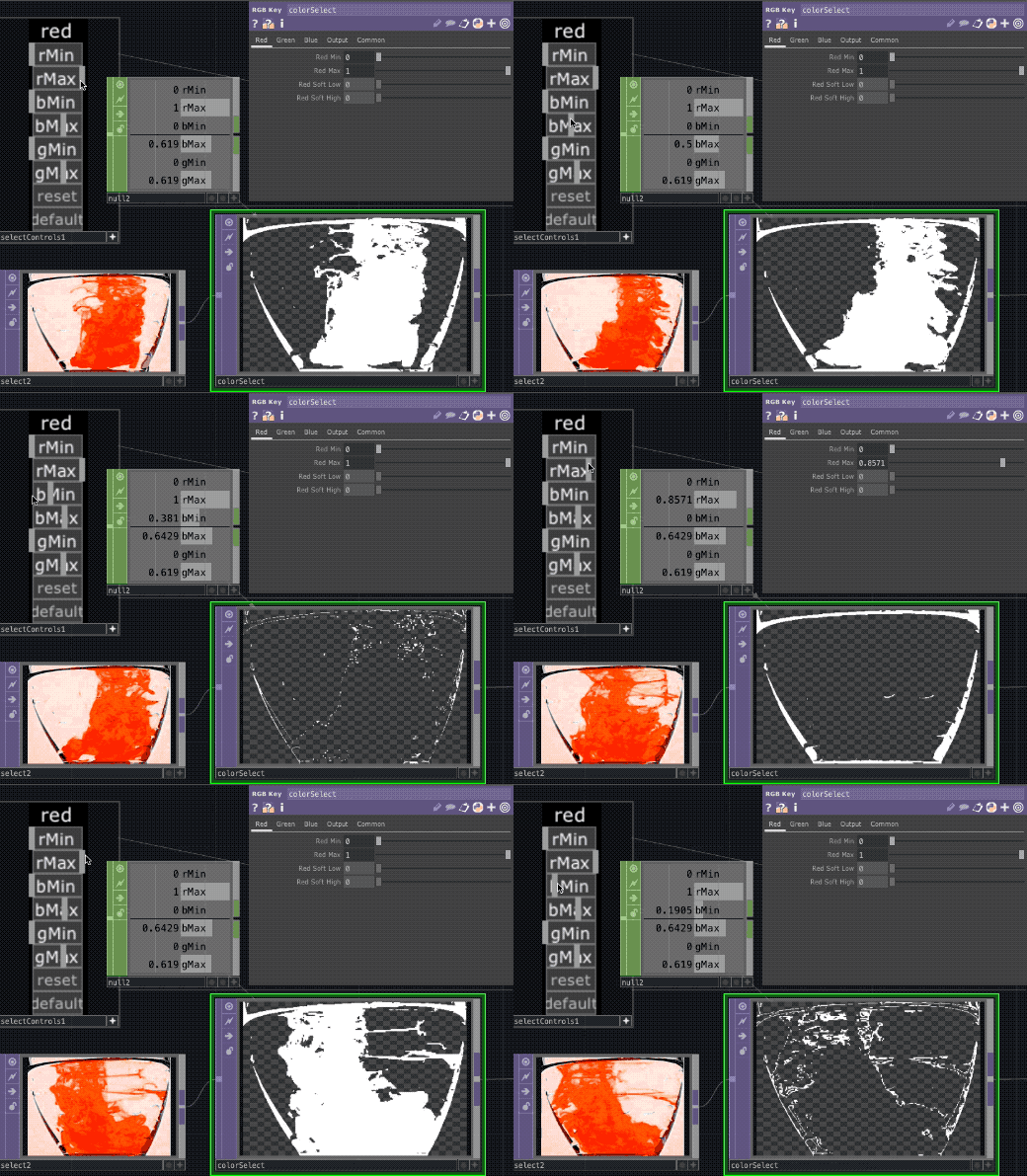
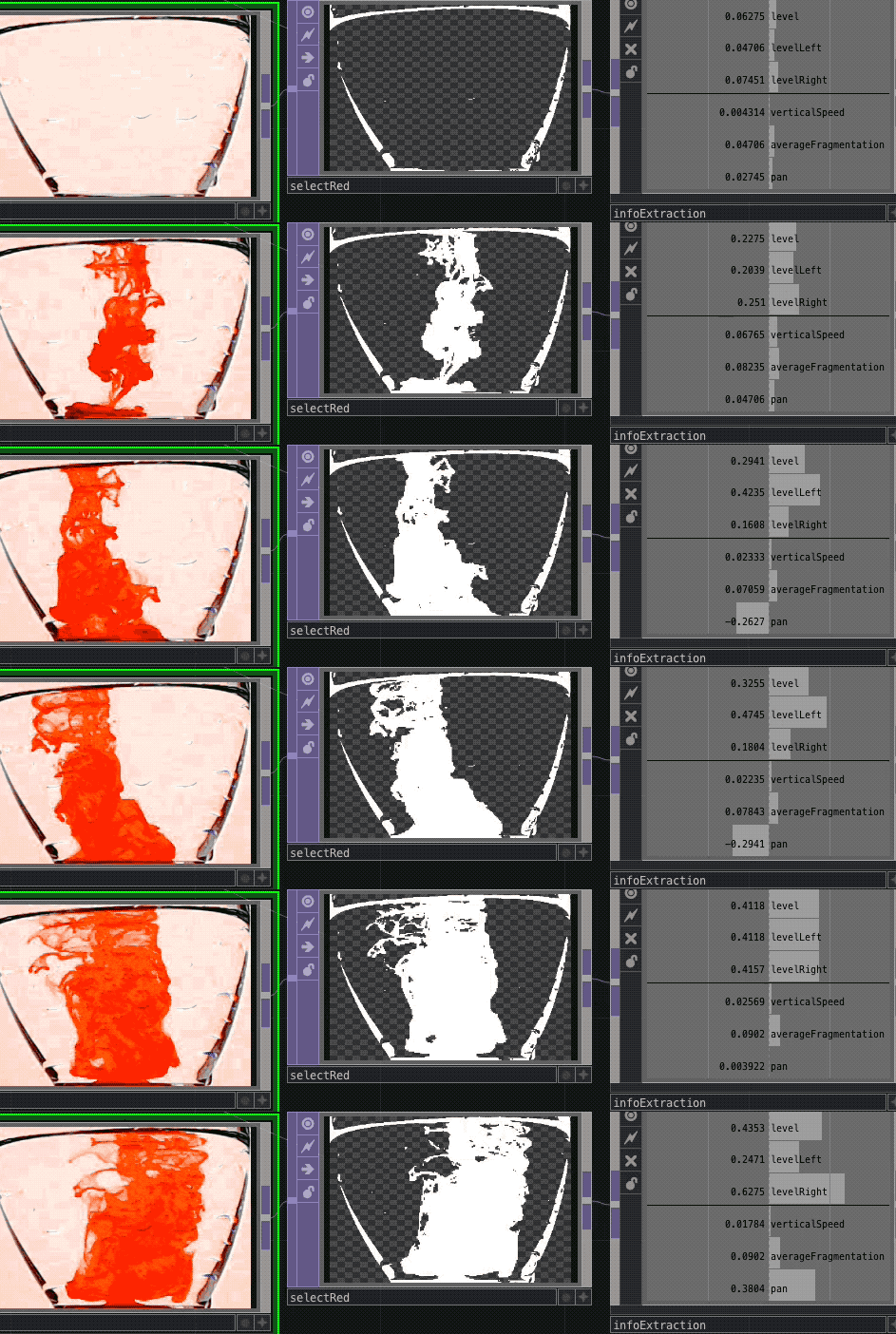
Each of these values can be linked to knobs in the Buchla259e Complex Waveform Generator, using Ableton and tdAbleton to have these values linked directly to those knobs.
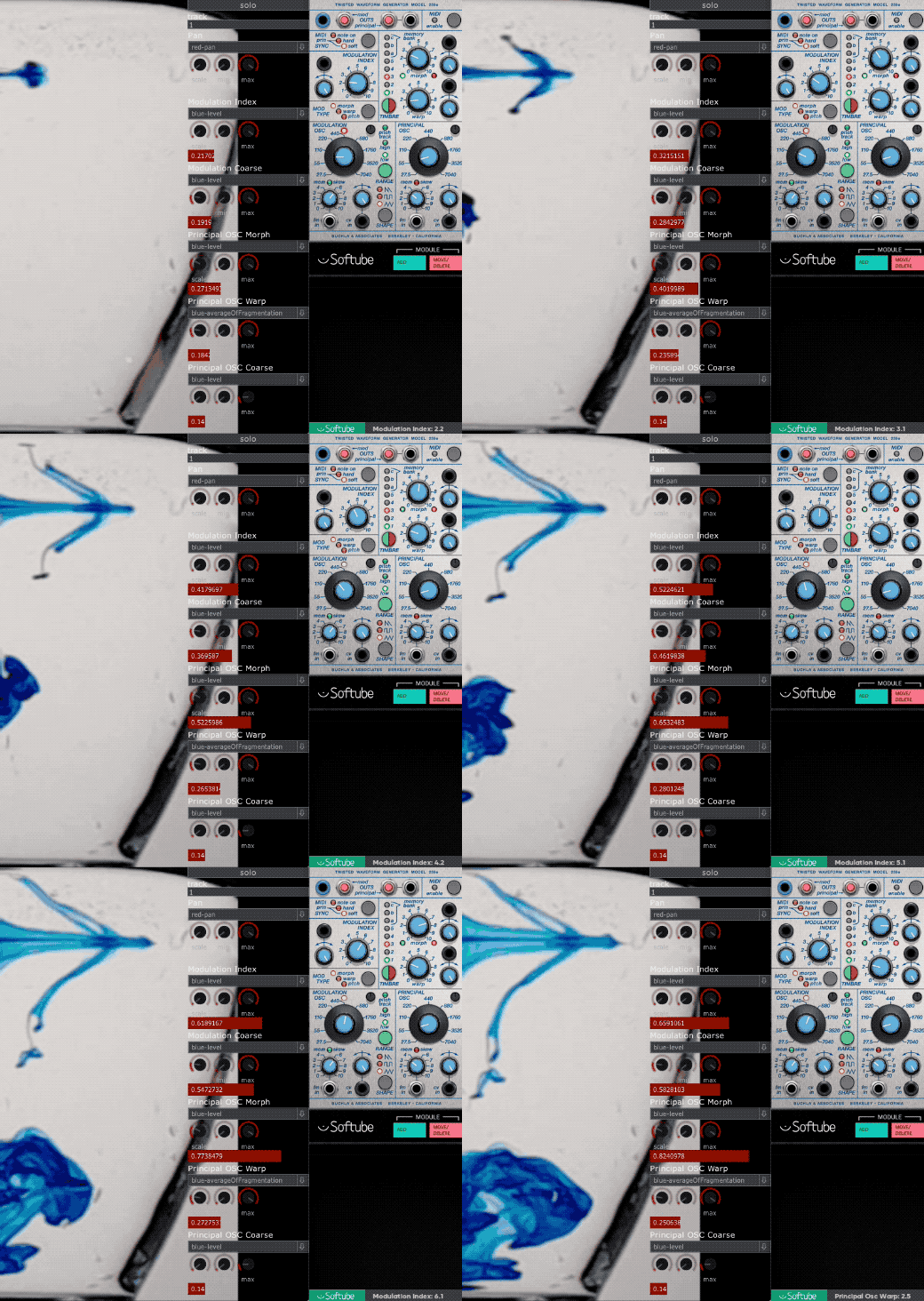
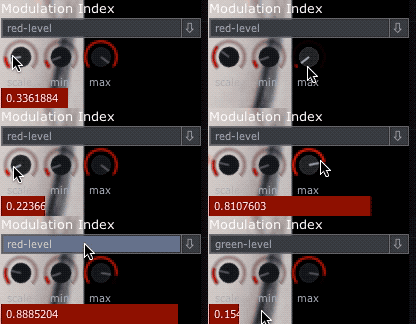
For each of these extracted values, the scale, min, and max can be set by adjusting knobs:
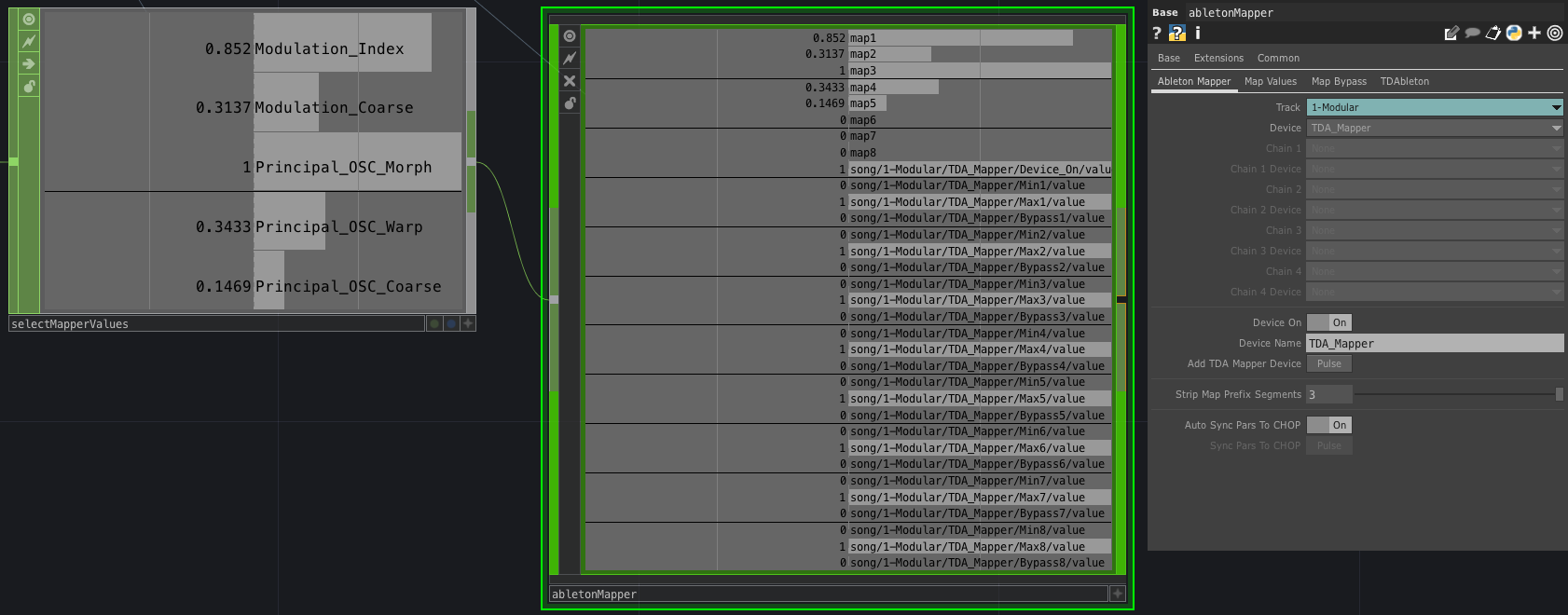
In particular, the abletonMapper component is used and mapped directly to Softube values:
Any of the above extracted values can be mapped directly to the panning of an ableton track, via the abletonTrack component.
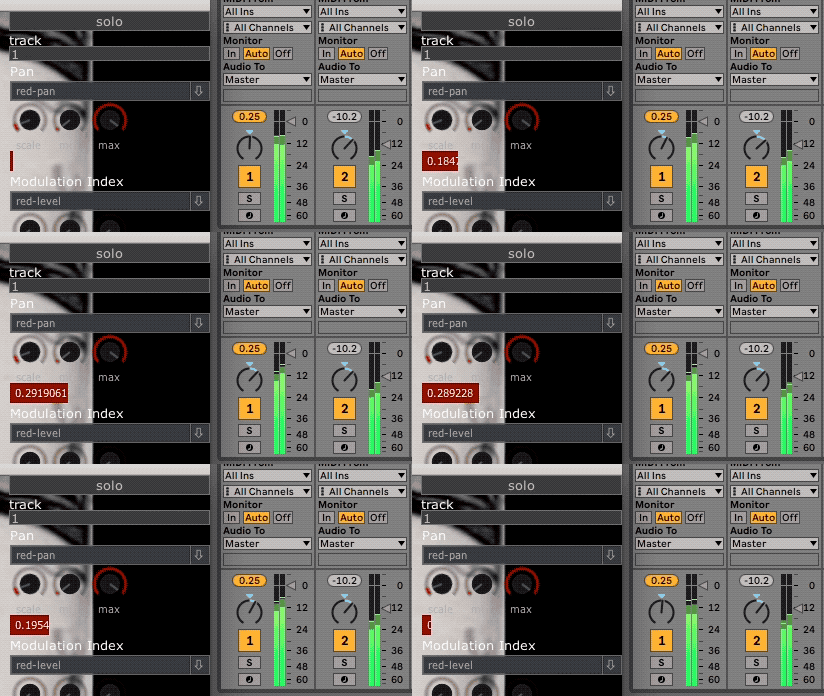
Any view can be solod, making the Ableton track solod and the view shown to the audience only show that component.
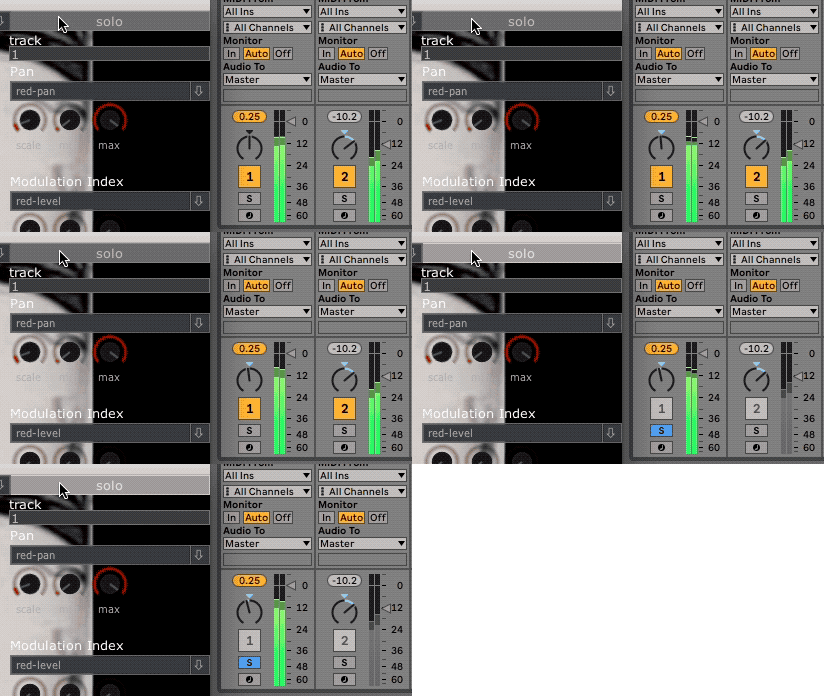
Here is one of the views in action:
Fabrication
Now to step back a bit, I will go through the fabrication process.
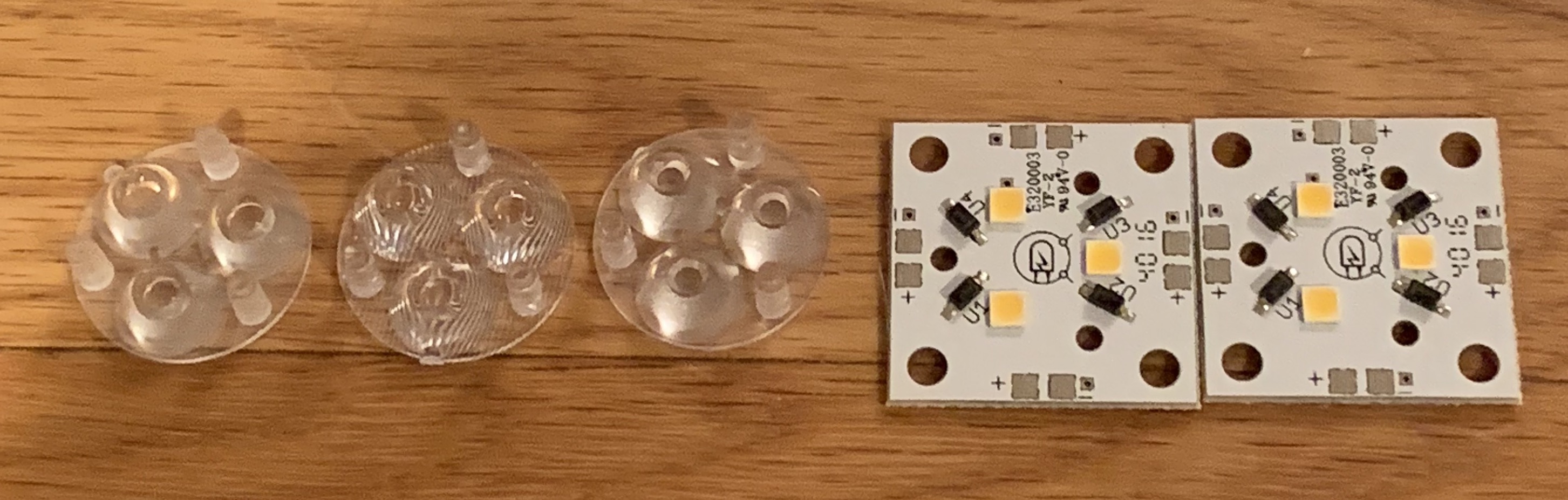
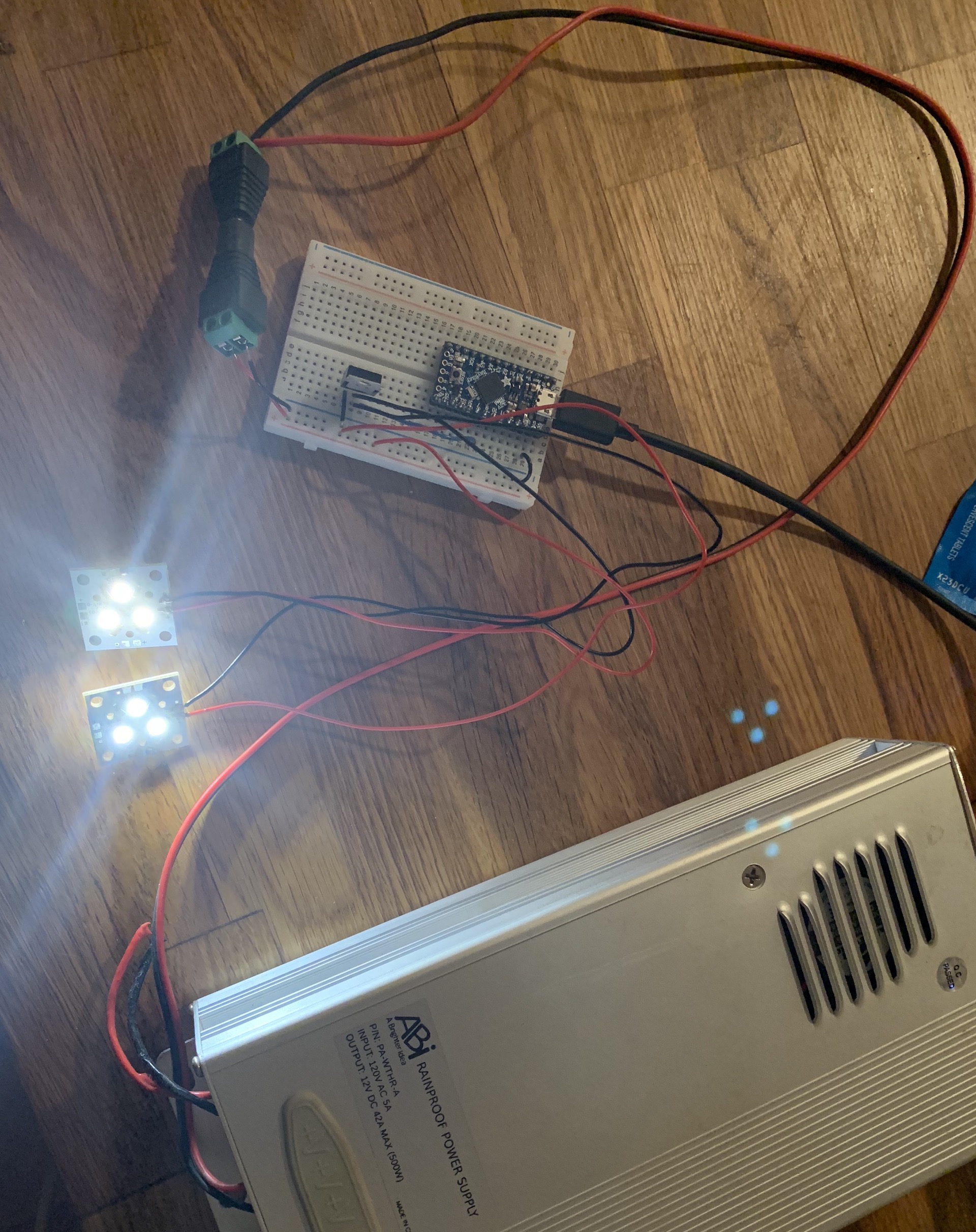
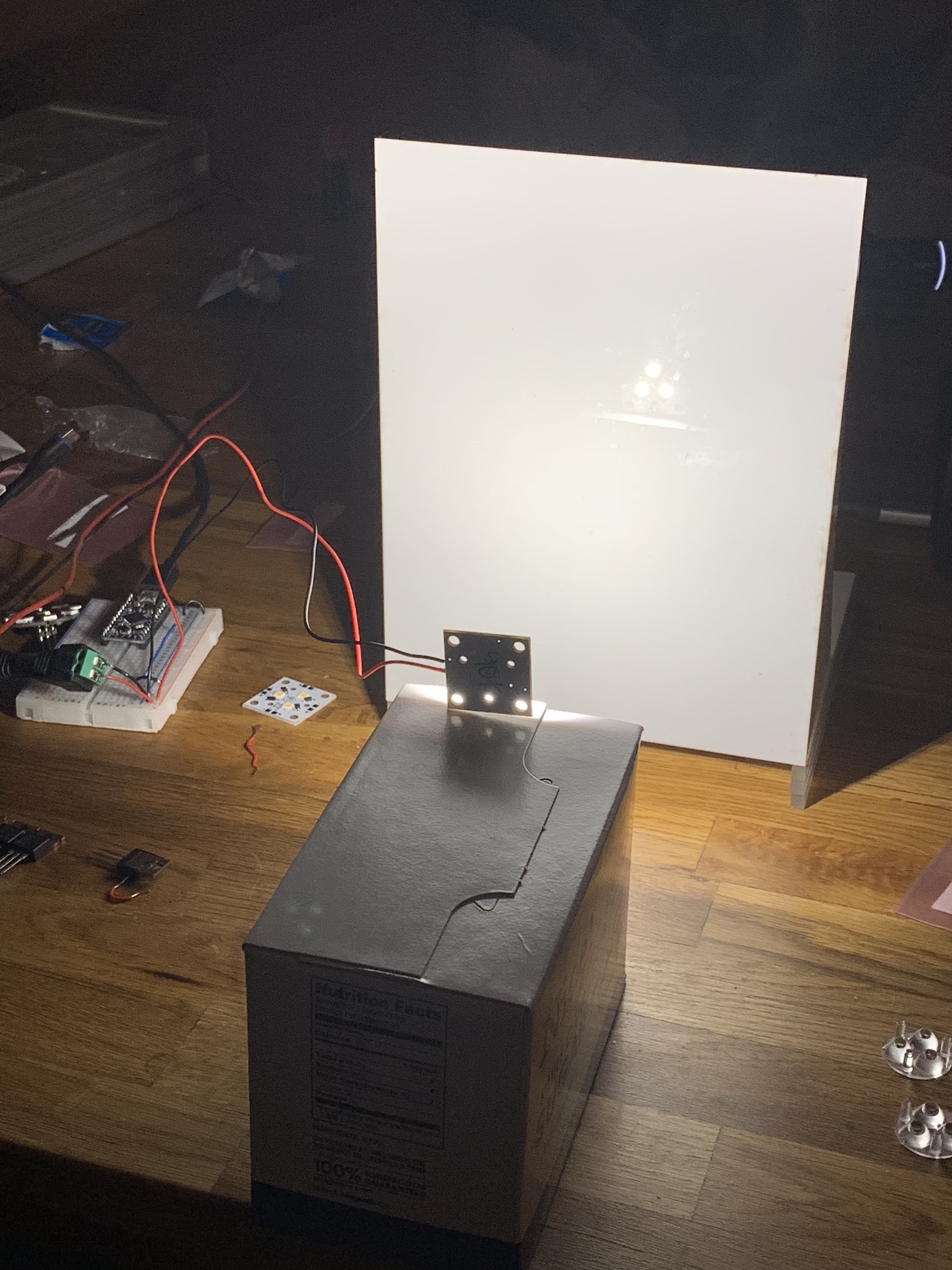
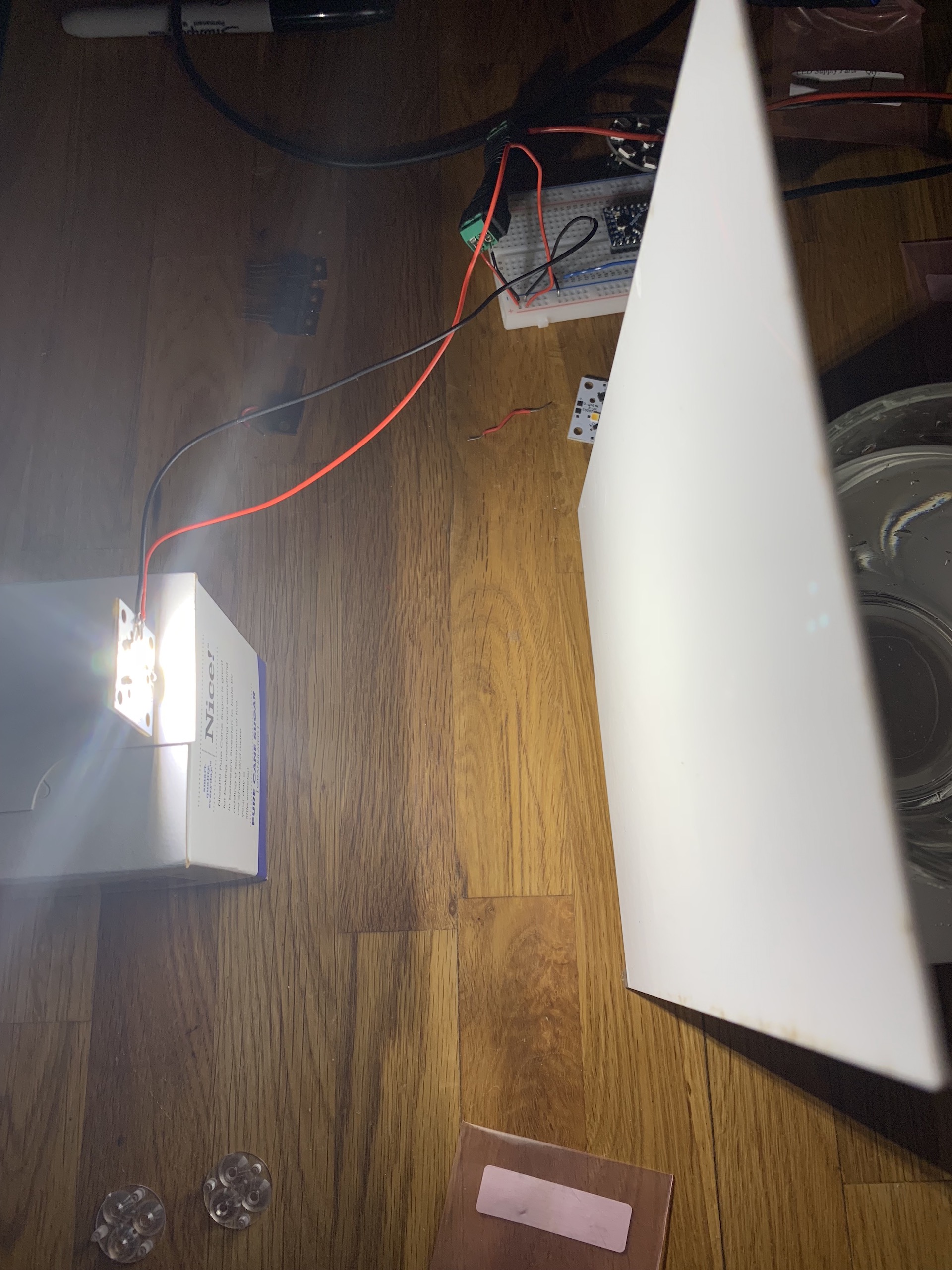
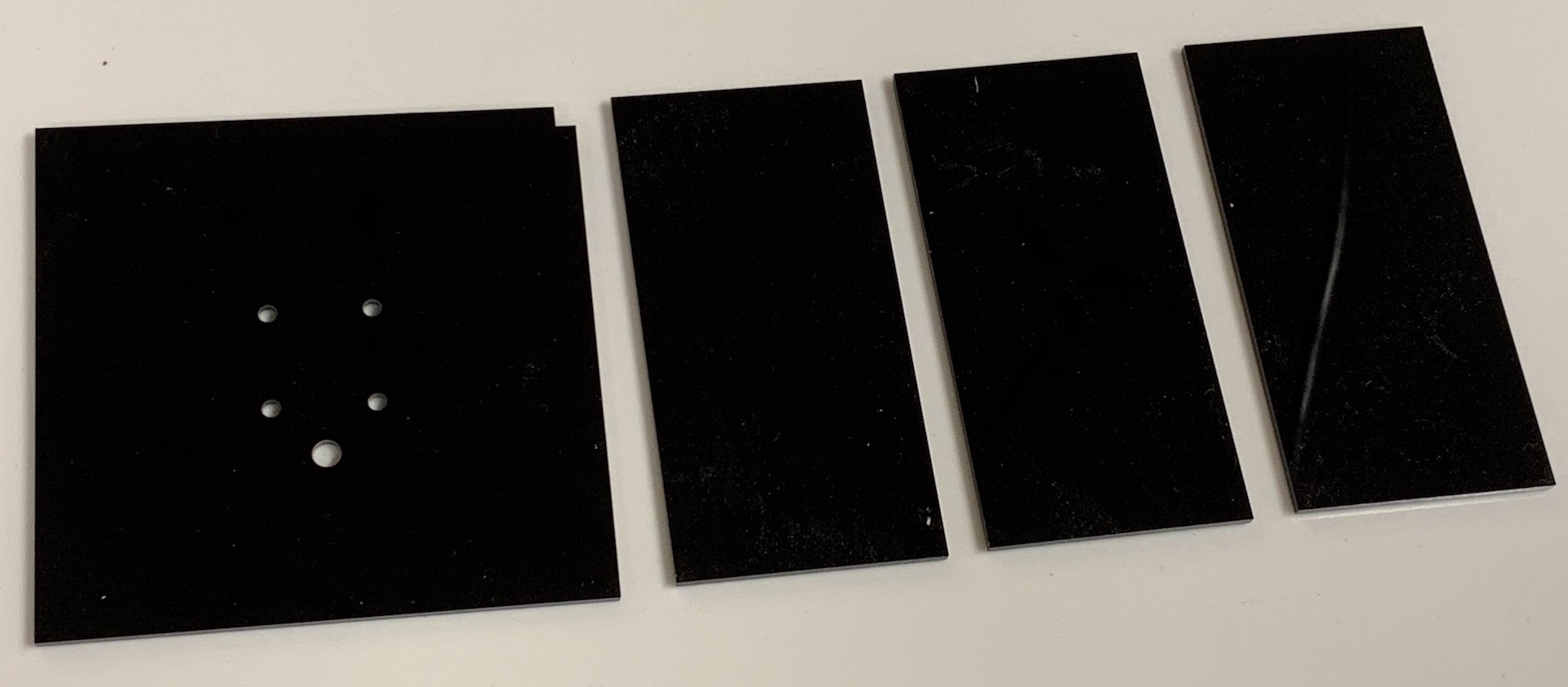
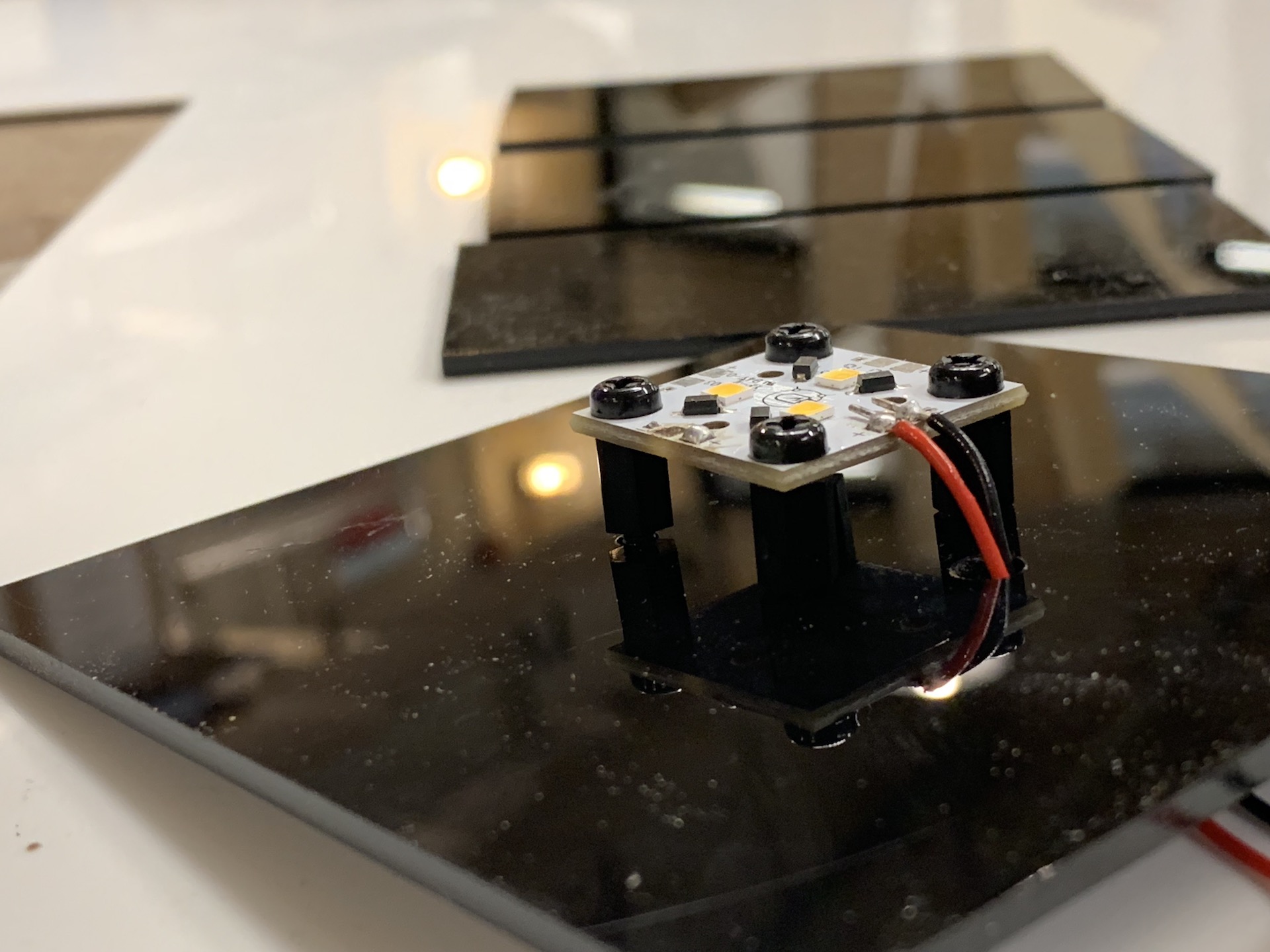
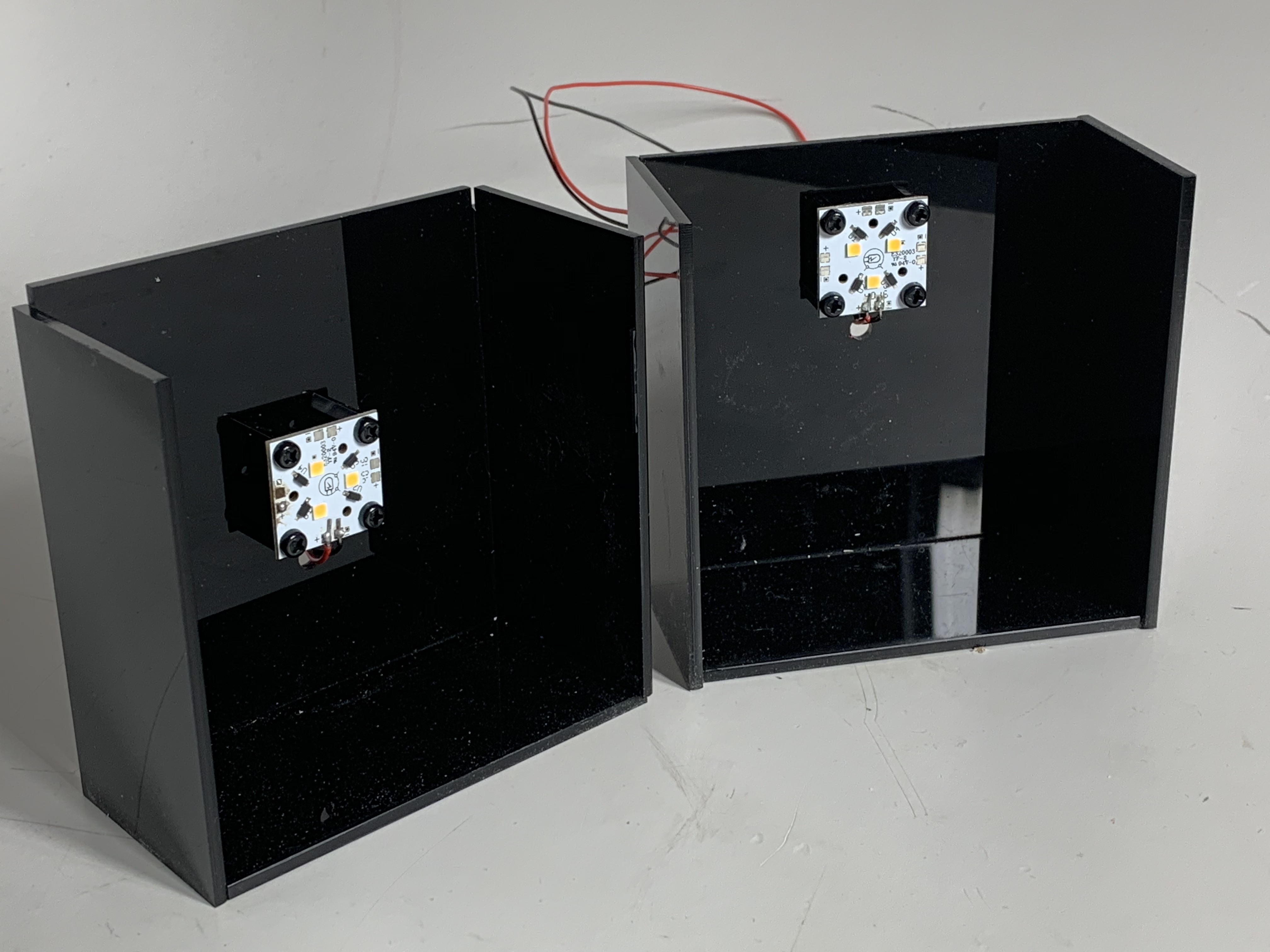
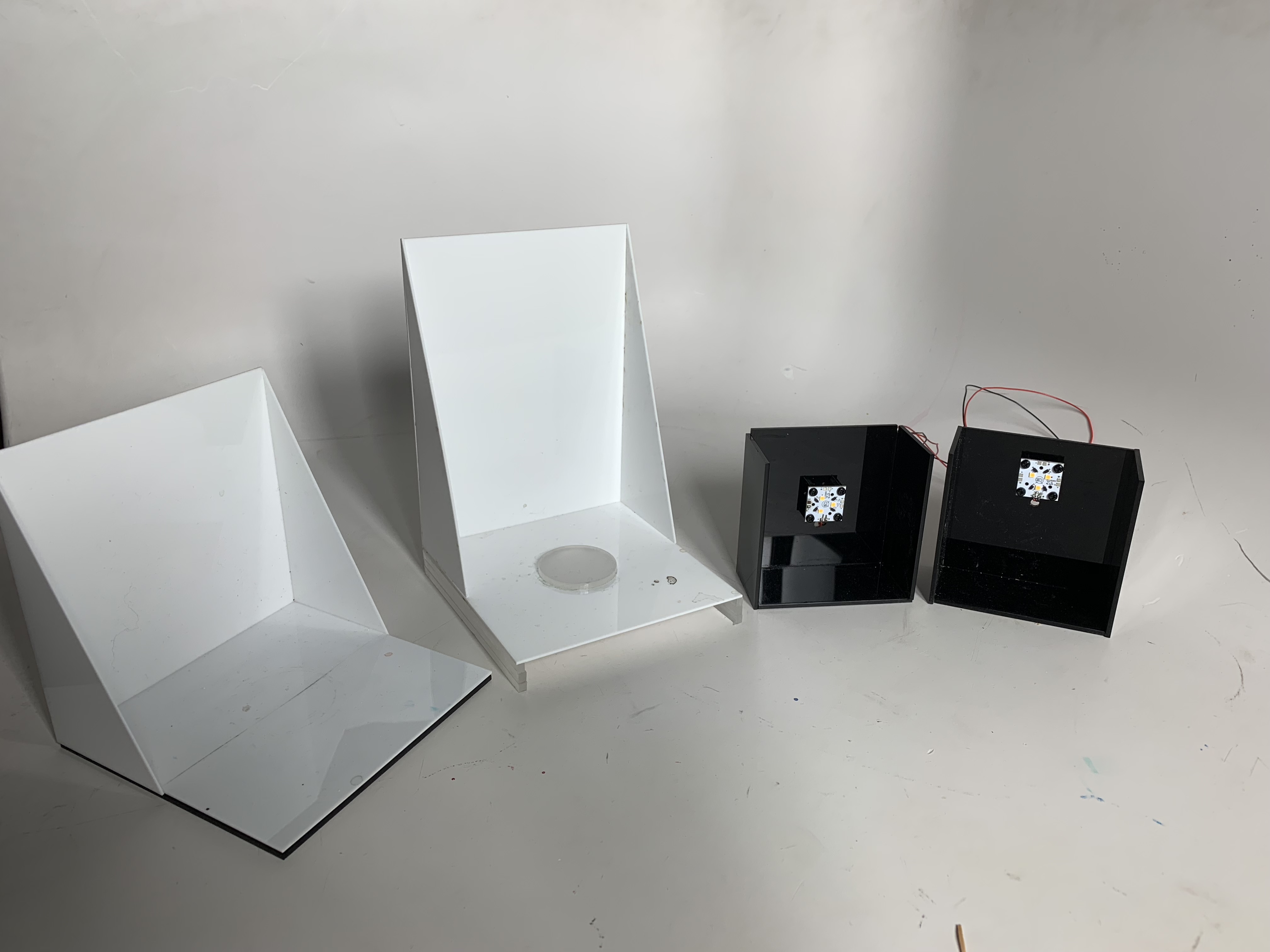
I met with Eric Rosenthal to figure out how to properly light these liquids to pick up the colors in the best way. He recommended getting full spectrum LEDs. I called LEDSupply and right away someone answered, telling me exactly which ones to get, the 4000k Neutral White Nichia LEDs, as they are powered direclty by 12v, and do not need an LED driver. This would allow me to also control them via PWM from an arduino, letting me programmatically turn them on and off.